

Does the I Ching really work? A question asked by many and a question that has a very ambiguous answer, I guess the answer really depends on what exactly do you mean by does the I Ching really work? if you mean does it tell your fortune or predict the future, then the answer is no, it doesn’t. But if you mean does it give you useful, practical advice that can help you navigate your way through the ups and downs of life, then I would have to say, yes it does work or at least it works for me, and just to clarify, by ‘work’ I mean it offers a perspective that I may not necessarily considered.
Before we get into what the I Ching can do for you, lets first take a look at what the I Ching actually is and isn’t.
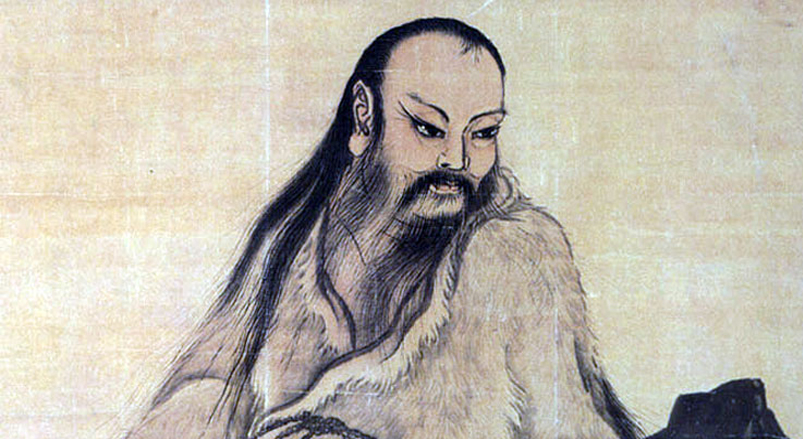
The I Ching, also known as the Book of Changes, is an ancient Chinese divination text and the oldest of all the Chinese classics. The I Ching is considered to be the oldest book in the world and dates back about 5,000 years, to the time of the mythical ruler Fu Hsi, one of the earliest legendary rulers of China (2800 BC-2737 BC). Since then it has been used by millions of people worldwide as a source of divination, that is a way to find practical, useful advice and knowledge about a current situation and how best to deal with that situation going forward. It is because of this forward way of thinking and planning that people mistakenly think the I Ching can be used to tell the future; it can’t, nothing can predict the future. But if you take the commentary for what it is, basically a heap of common sense mixed with results based on previous experiences, then the I Ching can be an invaluable source for planning ahead.
It is this word ‘divination’ that I think gives people the wrong idea of what the I Ching actually is.
Divination: the practice of seeking knowledge of the future or the unknown by supernatural means
Seeking knowledge of a future event is somewhat different to predicting how a situation will play out in the future. Asking the right question is paramount to receiving a meaningful response from the I Ching.
So how exactly does the I Ching give you advice?
The I Ching is made of 64 chapters, each giving detailed commentary and advice that can be applied to the situation about which you are enquiring. Each chapter is represented by a Hexagram. An Hexagram is made up of 6 horizontal lines that the enquirer generates by using a variety of different methods, the most popular of which is the three coin method. Detailed instructions of the three coin method can be found here.
The enquirer will start by asking a question to the I Ching, these questions need to be specific and not just general questions such as “will I get married?” or “will I get the job I applied for?” Asking these questions will often find the I Ching giving you irrelevant or confusing advice. Instead, you should ask questions such as “how can I live my life to give me the best opportunity of meeting somebody who I will eventually marry?” or “how can I best apply my skills to give me an advantage when applying for a job?” When you ask this types of questions, the answer provided is much more relevant and meaningful.
Are the answers given accurate?
I am not sure if ‘accurate’ is a word I would use to describe the answers given by the I Ching to the questions that I have asked, in fact I would even go as far to say that the I Ching doesn’t actually give an ‘answer’ to a question, it merely gives a ‘response’ and it is then up to the individual to interpret that response.
In my own personal experience of using the I Ching, I can honestly say that the responses it gives can be very ambiguous indeed and quite often the responses can appear to have absolutely nothing to do with the question being asked. It is often said that the I Ching doesn’t actually tell you what you ‘want’ to hear but what you ‘need’ to know. In some of the more traditional translations, some of the Confucianist type responses wouldn’t look out of place in a Chinese fortune cookie. It is because of the ambiguity found in the responses, that thousands of people swear by the I Ching’s accuracy, but I would argue that they are merely ‘making’ the response fit their desired outcome. It is also worth considering that the emotional state of mind of the enquirer during the consultation with the I Ching can easily sway their interpretation of the response. For example if somebody was suffering because of a recent break up and asked the I Ching a question relating to the relationship, they may receive a response that includes the following line:
Perseverance brings good fortune
But what does this mean? does this mean one should persevere and try to save the relationship or does it mean one should persevere with being single because the result will be someone or something better will eventually come along?
Dependent on the individual and their preferred outcome, they will invariably make the response ‘fit’. It is this confirmation bias that makes the I Ching seem so pointless.
Conclusion
So, you might ask, “what exactly is the point then? I mean if the I Ching doesn’t give a definitive answer to the enquirers questions and the answers it gives are ambiguous, why bother?” well for me personally, I bother because the responses given to a question that I am pondering often give me a different perspective on things, a new way to think about a situation that I hadn’t considered before. It is almost like asking for a second opinion from a friend, although you might not not necessarily follow their advice, their opinion gives you food for thought. I also find consulting the I Ching to be a very soothing and therapeutic process and can be a very spiritual experience.
I would thoroughly recommend the use of the I Ching as a form of relaxation or as a spiritualistic experience, it is almost like a form meditation. It is also a great way to find a new perspective on a problem or challenge that you have. But if you are looking for something to provide solutions to your problems and answers to your questions? I really wouldn’t bother with the I Ching, you may as well take advice from the aforementioned fortune cookie.
My Favourite I Ching Books
Many of the traditional translations of the I Ching are very difficult to interpret for the layperson and the responses can be very difficult to make any sense of as they are based on ancient Chinese philosophy and proverbs. Having said that, they can make for an interesting read. But I personally prefer some of the more modern translations that make it much easier to relate the response to the question being asked.
Here are some of my favourite translations.
A Guide to the I Ching Paperback
This translation is my personal favourite. Very easy to use, to read and to understand.
“A Guide to the I Ching” is an interpretive manual to the classic Wilhelm/Baynes translation of the I Ching. Now a classic in its own right and translated into other languages (German, Spanish, Portuguese, Croatian, and Italian), the “Guide” is recognized by teachers and long time students of the I Ching as indispensable to its understanding and use. Developed from notes taken over many years, the Guide mirrors the reader’s true inner feelings, helping him to bring his life and fate into harmony with the Tao — the way of the Universe.
Complete I Ching: 10th Anniversary Edition: The Definitive Translation
I have the original version of this book but it doesn’t seem to be available any longer. I am sure this version is even better being that it is new and updated.
A native Chinese speaker, Master Huang first translated the original ideograms of the I Ching into contemporary Chinese and then into English, bringing forth the intuitive meanings embodied in the images of the I Ching and imbuing his translation with an accuracy and authenticity not possible in other English translations.However, what makes his translation truly definitive is his return to prominence of the Ten Wings, the commentaries by Confucius that are essential to the I Ching’s insights.
This 10th anniversary edition offers a thorough introduction to the history of the I Ching, how to use it and several new divination methods; in-depth and easy-to-reference translations of each hexagram name, description and pictogram and discussions of the interrelations between the hexagrams and the spiritual meaning of their sequence.
Symbols Of Love: Relationship Guidance from the Ancient Oracle
For those looking for thoughts and reflections on their love life, I can wholeheartedly recommend this easy to use translation by Stephen Karcher
The I Ching or Classic of Change is the oldest and most respected oracle book or divinatory system in the world. In SYMBOLS OF LOVE, author Stephen Karcher has selected parts of the I Ching hexagrams that specifically apply to relationships, and he provides simple instructions on how to consult this ancient Oracle and interpret its answers to learn the ways in which you can most successfully interact with friends, family and partners.
The reader can discover which of the 22 ‘models of relationship’ is at work in their lives at that moment, ask questions of the Oracle and use the answers to help understand what is happening in their interaction with others, avoid painful moments and the more obvious mistakes, and recognise when something or someone is truly significant.