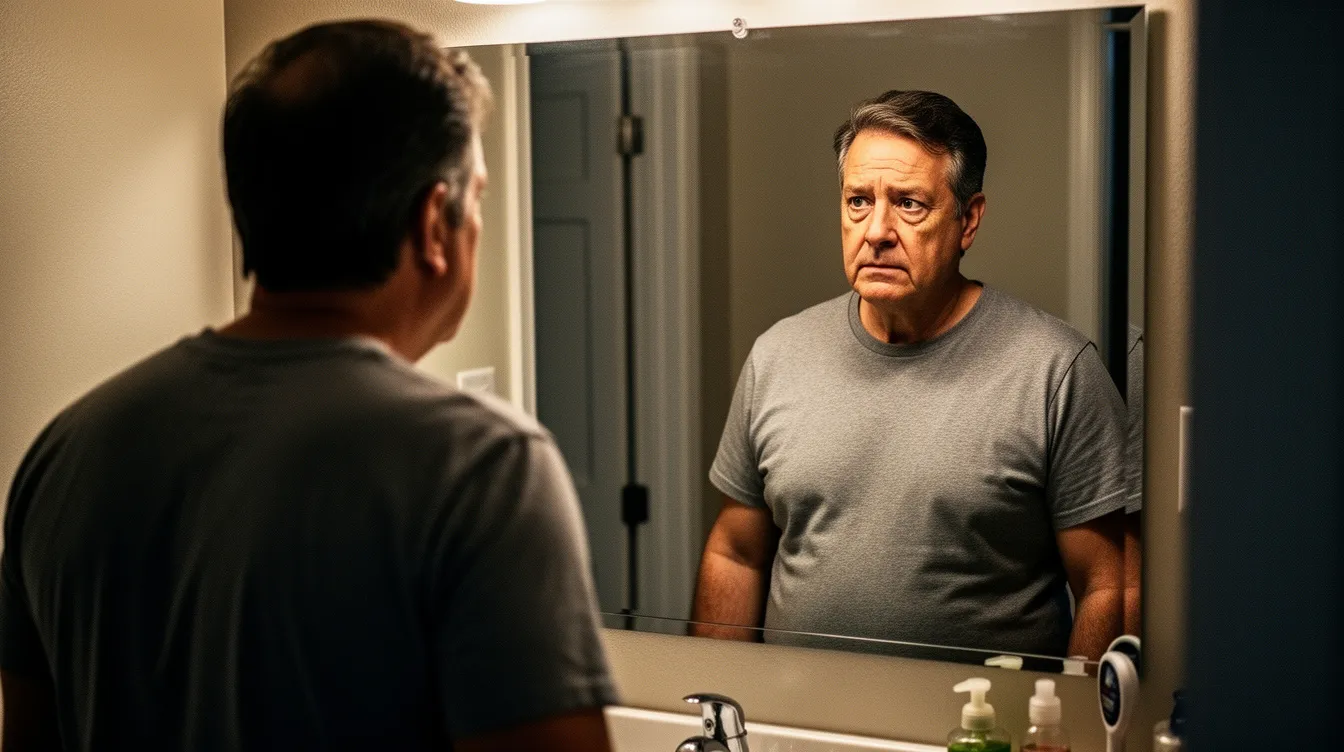


Most men (or women) don’t suddenly decline. They slowly fall into something I call the Comfort Trap. It doesn’t take everything at once. It just steals one percent of your capability every month.
And by the time you notice what’s happening, you’re already weaker, slower, and less capable than you used to be.
What Is the Comfort Trap?
The Comfort Trap is subtle. It doesn’t feel like a mistake. It feels like a reward. You train a little less. You rest a little more. You start choosing ease over effort without really thinking about it.
And over time, your body adapts to that lower standard.
Strength fades.
Mobility decreases.
Energy drops.
Not because you’re over 40—but because you’ve stopped demanding more from your body.
If you prefer to watch rather than read, I break everything down in this video below.
Lie #1: “I’ve Earned the Rest”
The first lie sounds like a reward.
It’s the voice that says, “You’ve worked hard for decades. You’ve built the career. You’ve raised the family. You’ve paid your dues. Now it’s time to coast.”
I fell into this trap for nearly a decade. What kept me off the mats for ten years wasn’t injury—it was getting into a long-term relationship.
I see this constantly in the gym. A guy is training four days a week, he meets someone new, and suddenly he’s “busy.”
At first, it’s the excitement of the honeymoon phase. But then it becomes the routine. You trade the struggle of the mats for the comfort of the couch and the takeout.
The danger is that your body is a master of adaptation. When you stop demanding strength and mobility from it, your body stops providing it.
Your bone density drops. Your muscle mass atrophies. Your nervous system loses its sharpness.
Rest is a tool for recovery. It is not a destination. We are not training for a finish line. We are training for capability. If you stop because you think you’ve earned it, you’re not recovering—you’re surrendering.
Capability is a use it or lose it resource. The moment you decide you’ve arrived is the exact moment the decline begins.
Lie #2: “I’ll Start When I Feel Ready”
The second lie is the motivation myth.
We wait to feel ready before we start.
But at 57, I don’t wake up feeling like a black belt. Most mornings I wake up sore, stiff, and tight. My joints feel like they’ve been filled with sand. Training is often the last thing I actually want to do.
This is where the real trap happens—the negotiation.
You lie in bed. You reach for your phone. You check emails or scroll. You flood your brain with dopamine and stress before you’ve even stood up. Then you rely on caffeine just to feel normal.
I’m human. There are mornings where I don’t get this right. But what works far better than motivation is a simple system.
Start with a big glass of water. Rehydrate your body and your brain.
Add a few minutes of light movement or stretching to wake up your nervous system.
Then get light exposure. Even on a grey UK morning, looking up at the sky for a few minutes helps reset your circadian rhythm.
This isn’t theory. It’s biology. It increases alertness, improves mood, and sets the tone for the day far more effectively than an energy drink.
You don’t need to feel ready. You need a system that works when you don’t.
Lie #3: “It’s Too Late to Pivot”
The final lie is the most damaging—the belief that your body is done.
That your injuries, your age, or your medical history have the final word.
I’ve had more injuries than I can count. I deal with arthritis and an autoimmune condition that causes constant inflammation. There are days when my body tells me not to move at all.
A few years ago, I had two herniated discs in my neck. I couldn’t turn my head properly for months, let alone train.
It would have been easy to stop there. To say, “That’s it. I had a good run.”
But what I’ve learned is simple: when I don’t move, I feel worse. Movement is the thing that keeps everything under control.
It helps manage the arthritis. It reduces inflammation. It keeps me functional.
That recovery took twelve months of slow, consistent effort. Nothing dramatic. Nothing exciting. Just showing up.
And I earned my black belt at 54.
It’s not that your body is too old. It’s that your approach needs to evolve.
You don’t need a new body. You need a better strategy for the one you have.
Biology will respond—if you give it a reason to.
How to Avoid the Comfort Trap After 40
The Comfort Trap is powerful because it feels easy.
It’s the path of least resistance.
But you don’t become the exception by doing what’s easy.
You become the exception by recognising these lies and choosing the harder path—especially when you don’t feel like it.
That doesn’t mean extremes. It means consistency.
Train a few times a week.
Move daily.
Challenge yourself regularly.
That alone separates you from most people.
Final Thought: Refuse Decline
Most people don’t make a decision to decline. They just stop making decisions that keep them strong. If you want to be different, it starts with awareness. Recognise the traps. Stop negotiating with comfort. Start rebuilding capability.
Because once you do that, everything begins to change.